Patrick Poon in Cha Journal compares three women to one another in less than 1,000 words…
Few would think to place the British writer Virginia Woolf, the Chinese writer Eileen Chang, and Chow Hang-tung, the Hong Kong barrister and Vice-Chairperson of the Hong Kong Alliance in Support of Patriotic Democratic Movements of China, side by side. Yet I believe the values each of them pursued throughout her life are ones they hold in common.
In the Wire China Michael Kovrig reviews a Safeguard Defenders book on China’s ‘black jails’…
…new first-person accounts of both PRC and foreign citizens abducted by the Chinese Communist Party’s security apparatus under a sinister procedure it calls zhiding jusuo jianshi juzhu 指定居所监视居住 or zhiju 指居 for short. The official English translation is “Residential Surveillance at a Designated Location” (RSDL), a bland bureaucratic mouthful that deliberately masks pre-arrest detention in a secret facility where your tormentors subject you to appalling abuse and your only right is to obey.
Lingua Sinica piece on how the downfall of Victor Orban also means the downfall of Chinese state media influence in Hungary…
This kind of media cooperation is political, not commercial. It does not relate to the media market. It has a political reason and a political goal. It is a tool for diplomacy. The Chinese side itself stresses that this cooperation runs under the “personal care and guidance” of the leaders from both countries, which tells you how political this is. These deals are part of bilateral diplomacy — but it also means that they are not run professionally, because a European state broadcaster having to cooperate with Chinese state media is not really a normal, professional agreement.
An interesting Twitter post analyzing People’s Daily reports of top Chinese leaders’ oration over the years. Nowadays, 60-80% of Xi Jinping’s speeches are described as ‘important’, while few other Politburo members’ are. Indeed, few others seem to make even unimportant speeches.
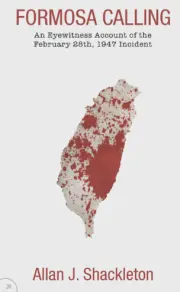
A Taipei Times op-ed looks at the use of ‘Formosa’ vs ‘Taiwan’ through the ages. (It mentions the name ‘Formosa’ entering Western headlines ‘after 1949’. Western news coverage of the Taiwanese revolt against the KMT/ROC’s occupation of the island earlier after WW2 referred to the ‘Formosan uprising’. A plug here for the 1948 book Formosa Calling by Allan J Shackleton.)
Out of action tomorrow, as I’m going to see a nice young lady on the 80-somethingth floor of IFC. She is my personal banking blah blah, and will offer me well-intentioned financial advice while I gently remind her that I’ve been investing since before she was born. When I last saw her she sat horrified as I explained why the Nvidia and other AI players were all propping up each other’s massive overvaluations and the whole bubble would burst at some point. The lure is that she will waive commissions on certain rather boring funds. Plus great coffee. And an incredible view.